
Environmental education is an activity that began to gain momentum in 2023. An initiative that, at first glance, might have seemed outside Fanamby’s area of expertise, but in which the Andrafiamena team firmly believed from the outset. Two years later, the more than encouraging results validate their convictions. A look back at a local success story.
A school like any other… on the surface
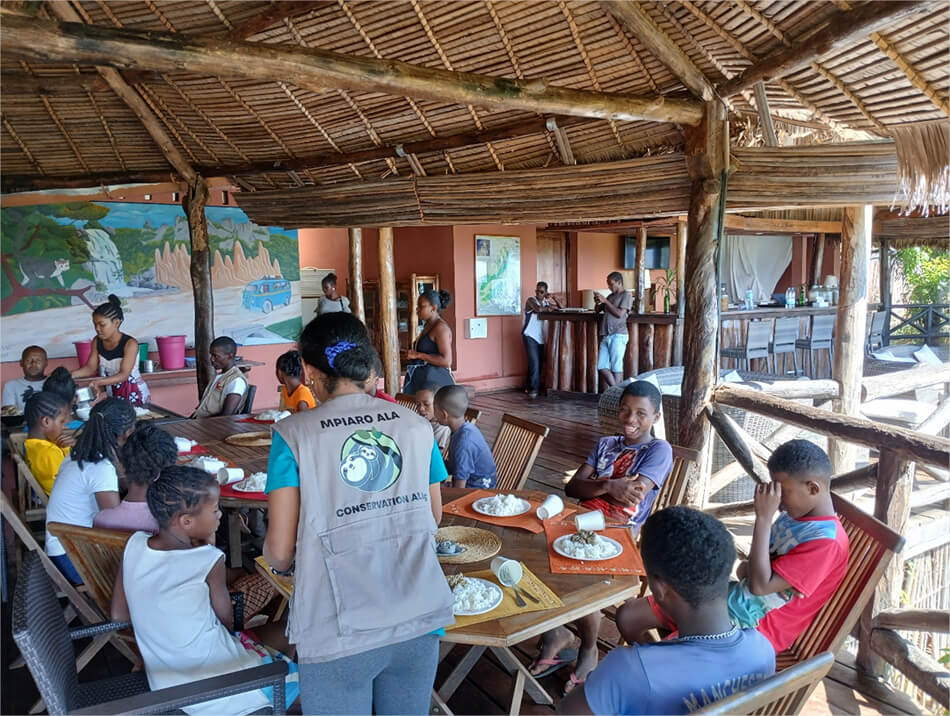
In Antsohihy Ambany, on the edge of National Route 5a, there is a Public Primary School (EPP) that the Andrafiamena teams are particularly fond of. At first glance, it appears to be an ordinary rural school. However, upon spending a little more time there, certain differences become apparent: here, the school has become a place of learning by doing.
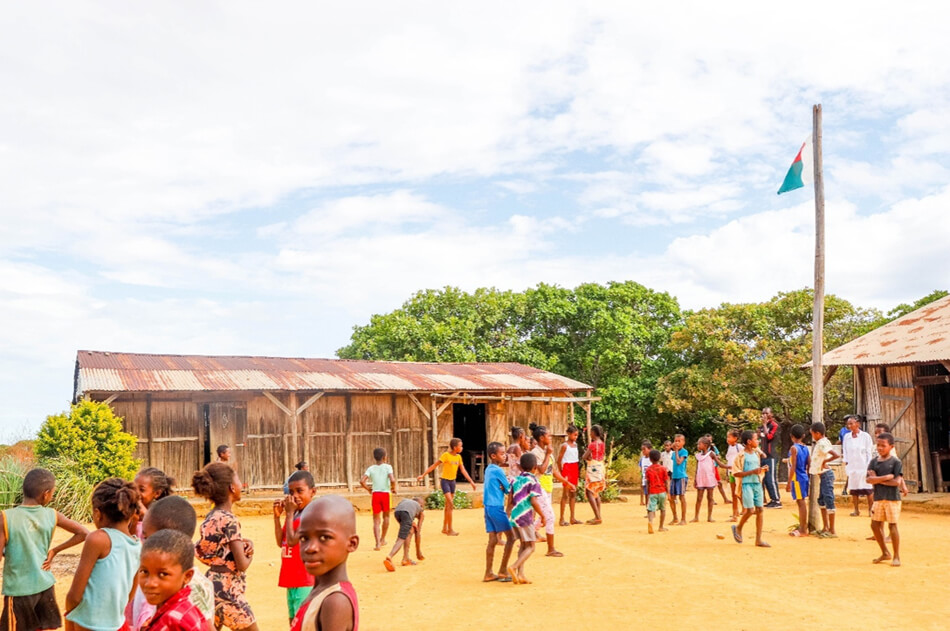
It all begins in the courtyard, where a vegetable garden is tended. Legumes and vegetables are grown there, serving as teaching tools. In math class, gone are the abstract examples like “Marie bought 20 grapefruits.” Now, exercises are grounded in reality: calculating the rectangular area of the garden, performing multiplications based on the harvested produce, or solving concrete problems from the immediate environment.
In French classes, the topics covered are also evolving. Students learn to talk about protected areas, biodiversity, and conservation, enriching both their vocabulary and their knowledge. Gradually, the environment is finding its place within the school curriculum, integrated into lessons and examples—small steps, certainly, but in the right direction.
Nature as a Classroom
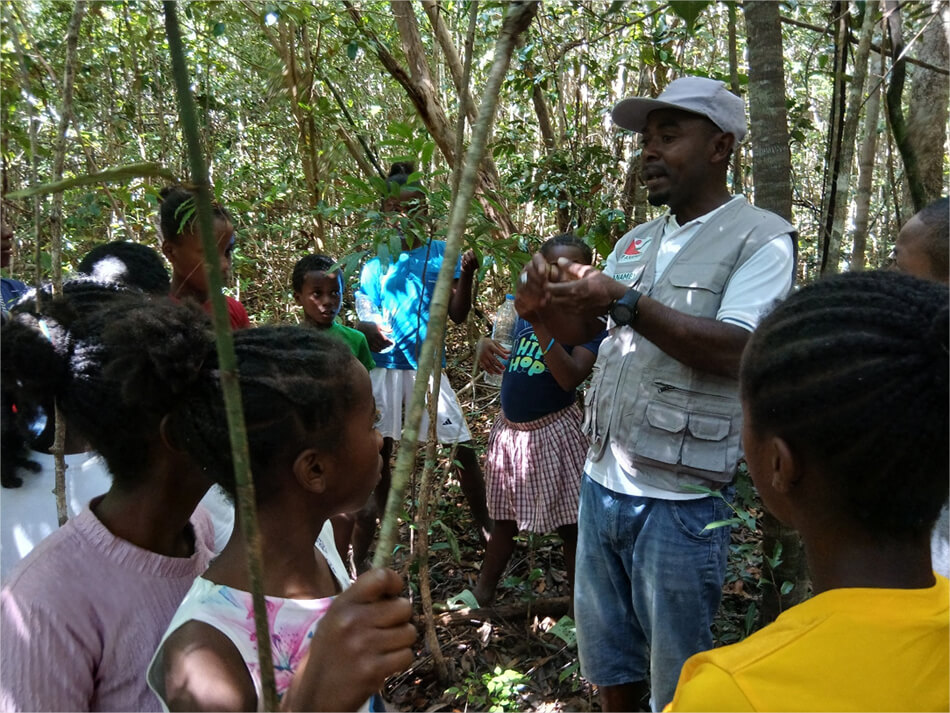
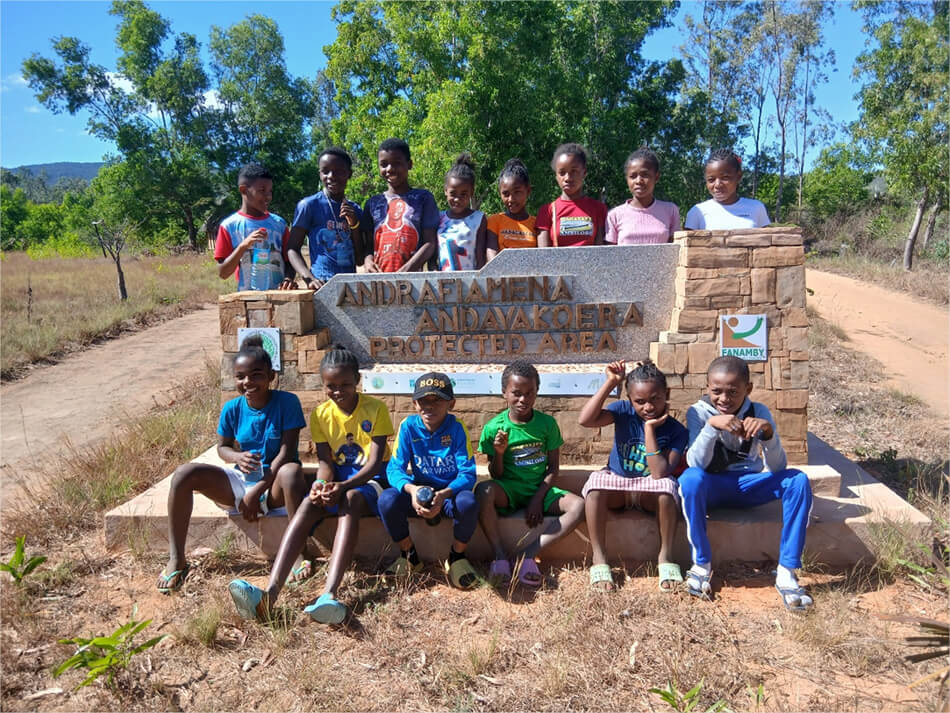
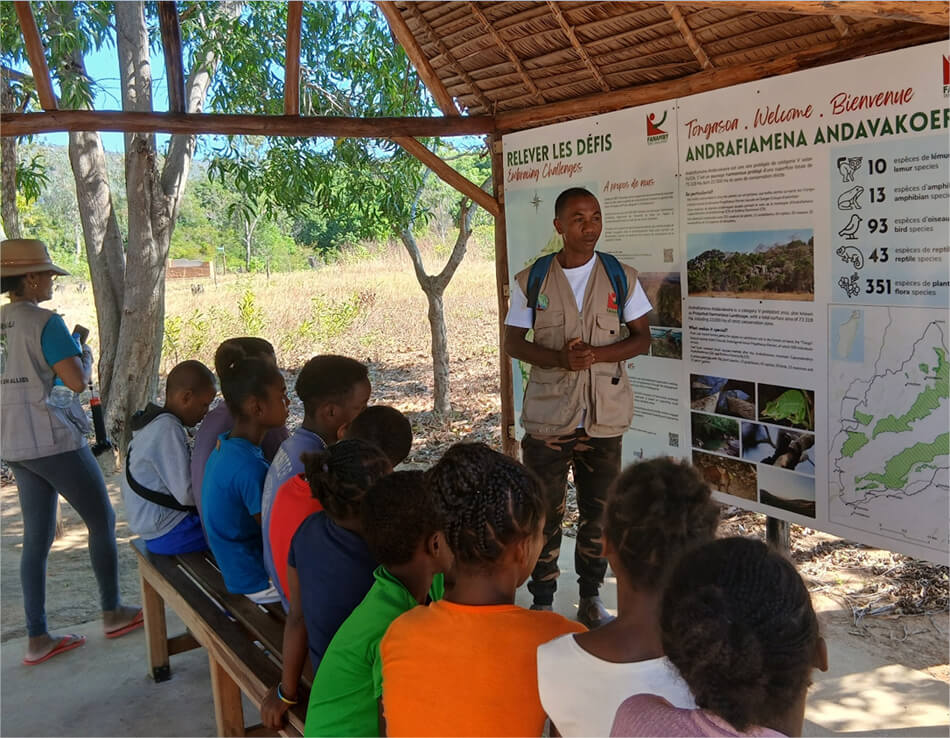
Learning extends beyond the classroom through outdoor excursions, which the students affectionately call “nature outings .” They visit the Andrafiamena Andavakoera protected area, including the Anjahankely tourist site. There, they learn to recognize plants, understand the water cycle, and identify lemur species.
To supervise these outings, the older girls act as guides. The KMTs (community patrollers) themselves pass on their knowledge. They teach the children how to locate water sources, share their experiences in the forest, and explain their work. From a young age, the students thus become aware of the pressures on their environment.
This learning experience is all the more meaningful given that the school is located in the immediate vicinity of the protected area. Indeed, just a few kilometers from the school rises the Andavakoera mountain range, which, together with the Andrafiamena range, forms the Andrafiamena Andavakoera protected area. For the students, this nature outing is an opportunity to connect with their forest, but also to better understand the behind-the-scenes efforts involved in its protection.
Towards school autonomy
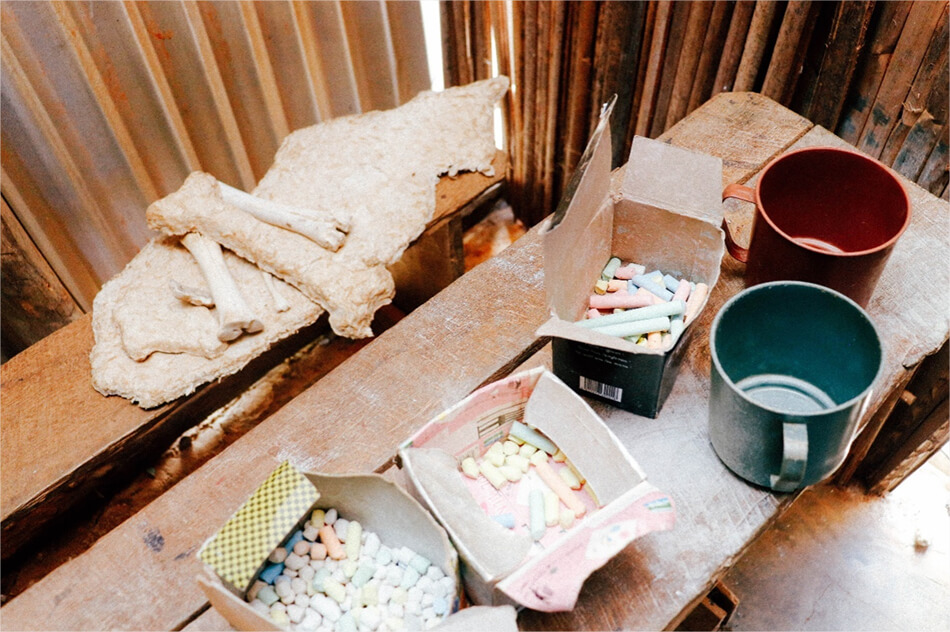
Economically, the model is proving successful. The vegetable gardens produce enough produce to fill the school coffers. This income allows for the purchase of essential teaching materials: chalk, sponges, buckets, but also supplies for creative projects, such as building a papier-mâché map of Madagascar. A remarkable achievement for a rural school.
Furthermore, other initiatives are now being led by the schools themselves. Among them is the creation of school nurseries composed of fuelwood seedlings and fruit trees by a primary school in Andrafialava. Launched this year, this activity involves students in transplanting the seedlings and also engages parents in their purchase and promotion, thus strengthening the financial independence of the schools.
Institutional recognition
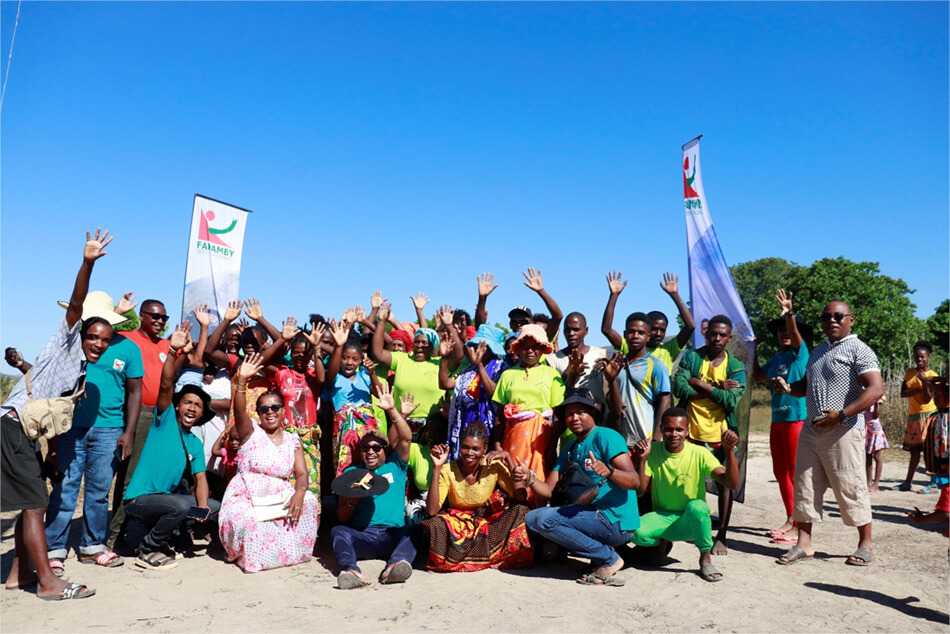
These successes have not gone unnoticed by the institutions. The Regional Directorate of National Education (DREN) commended these efforts by personally participating in the International Day for Biological Diversity. Whereas in the past, each initiative required cumbersome administrative procedures, this time the process was greatly simplified. Even better, the director volunteered to hike for five hours on a particularly challenging trail to see the work firsthand and participate in the celebrations.
Collaborating with local communities to preserve biodiversity
While the schools of Antsohihy Ambany and Andrafialava were pioneers in this approach, they are no longer alone. It has become a dynamic that has spread rapidly, as 12 other schools have joined the movement, bringing the number of primary schools involved around the AndrafiamenaAndavakoera protected area to 14.
In this endeavor, Fanamby reaffirms its role as a partner. The goal is neither to impose a vision nor to act in place of the schools. Rather, it is to work alongside them to co-create, jointly structure initiatives, and establish the conditions for their success. By maintaining this approach, Fanamby ensures that these partnerships take deep root, thus shaping a future where schools and local communities are the proud guardians of their forest.