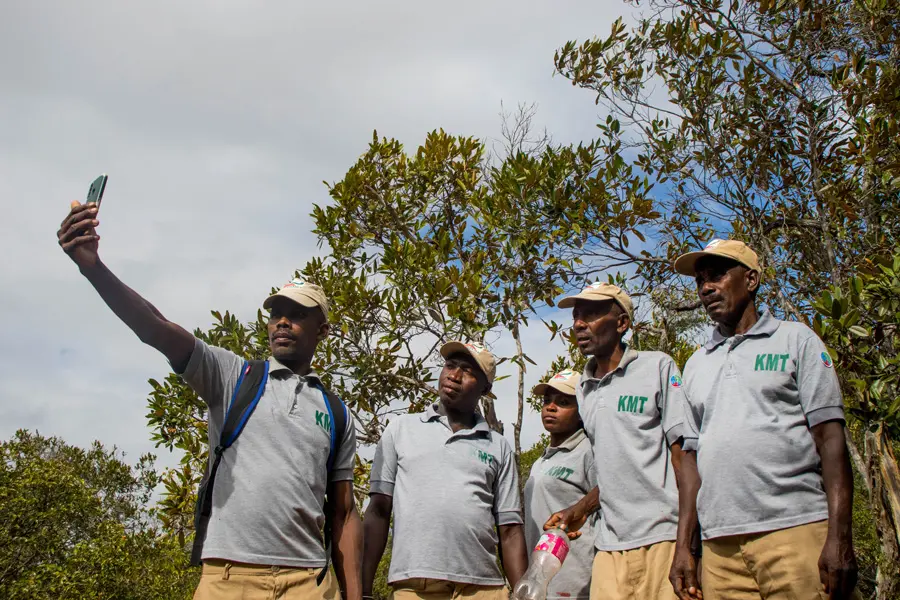
In the Andrafiamena-Andavakoera Protected Area, bushfires remain one of the main threats to forests and the species living within them, particularly Perrier’s Sifaka, an endemic lemur of northern Madagascar. Since 2022, green brigades have been mobilizing neighboring communities to prevent fires, respond quickly in the field, and raise awareness among their neighbors—an initiative demonstrating that sustainable conservation is built above all with those who live closest to the forest.
Every year, the dry season brings its share of smoke. Behind these gray columns lie bushfires that, in just a few hours, can reduce hectares of forest to ashes. Often, these fires originate from uncontrolled agricultural practices or unsupervised charcoal kilns. They destroy natural habitats, weaken already vulnerable ecosystems, and threaten emblematic species of the region, such as Perrier’s Sifaka (Propithecus perrieri).
In a protected area as vast as Andrafiamena-Andavakoera, forest protection cannot rely solely on managers or authorities. The first to see smoke rising are very often the inhabitants of nearby villages. It was from this reality that the Green Brigades initiative was born in 2022.
A Community-Based Mechanism
A green brigade is a team of volunteers from local communities, trained to actively contribute to the protection of natural resources. Their mission rests on a dual role: preventing fires through a constant presence in the field and responding quickly when a fire outbreak is detected.
Because they live closest to the forest, these volunteers know the trails, vulnerable spots, and habits of their territory. This proximity allows them to act with a speed that no outside system could match.
However, their role goes far beyond fighting flames. They also help shift practices and establish a genuine culture of prevention within the villages.
Preventing Before Extinguishing
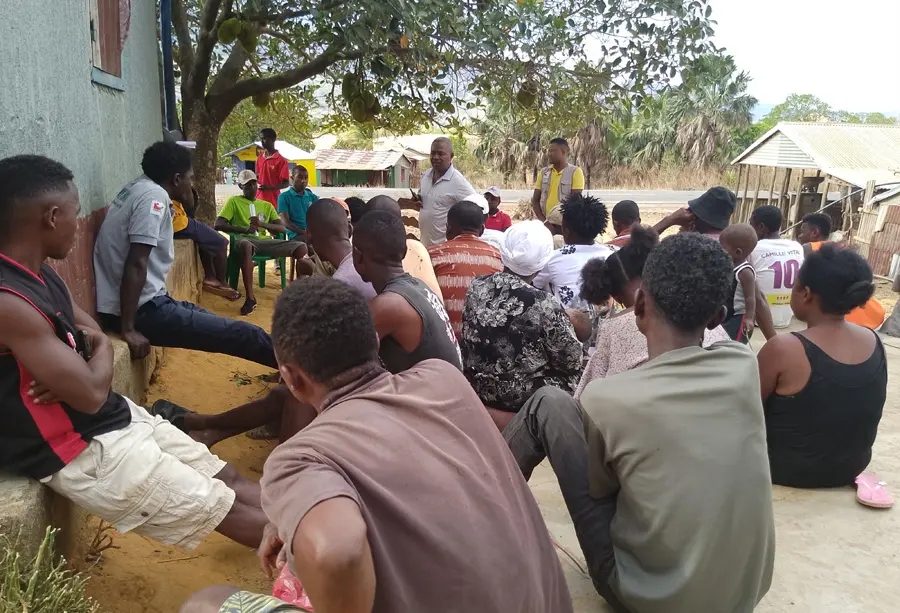
The fight against bushfires begins long before a spark appears. Throughout the year, green brigades carry out complementary actions aimed at reducing fire risks and strengthening community vigilance.
Their missions include:
- Regular patrols in the sectors most exposed to fires;
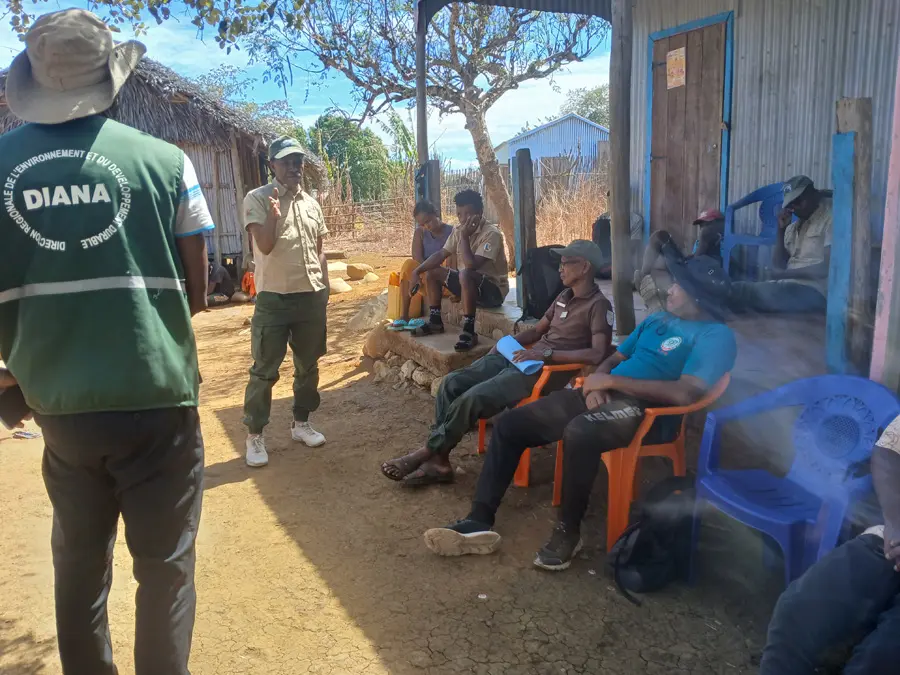
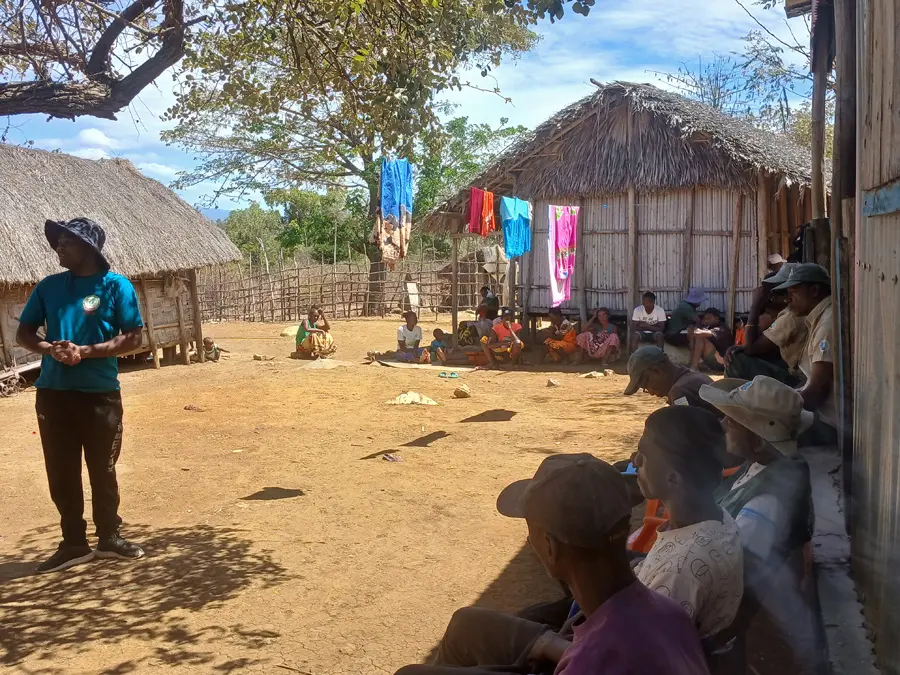
- Community awareness raising—particularly among farmers and charcoal producers—regarding bushfire risks, protected area management rules, and best practices to adopt;
- Environmental education initiatives for local residents;
- Early detection of fire outbreaks, rapid alerting of competent authorities, and active participation in firefighting operations;
- Support for law enforcement in cases of flagrant environmental offenses;
- Participation in revitalizing the KMDTs (Komity Miady amin’ny Doro Tanety, local committees for fighting land fires) to improve community organization in the face of risks.
This regular presence gradually transforms forest protection into a shared responsibility. Collective vigilance takes root, where everyone becomes an active participant in prevention.
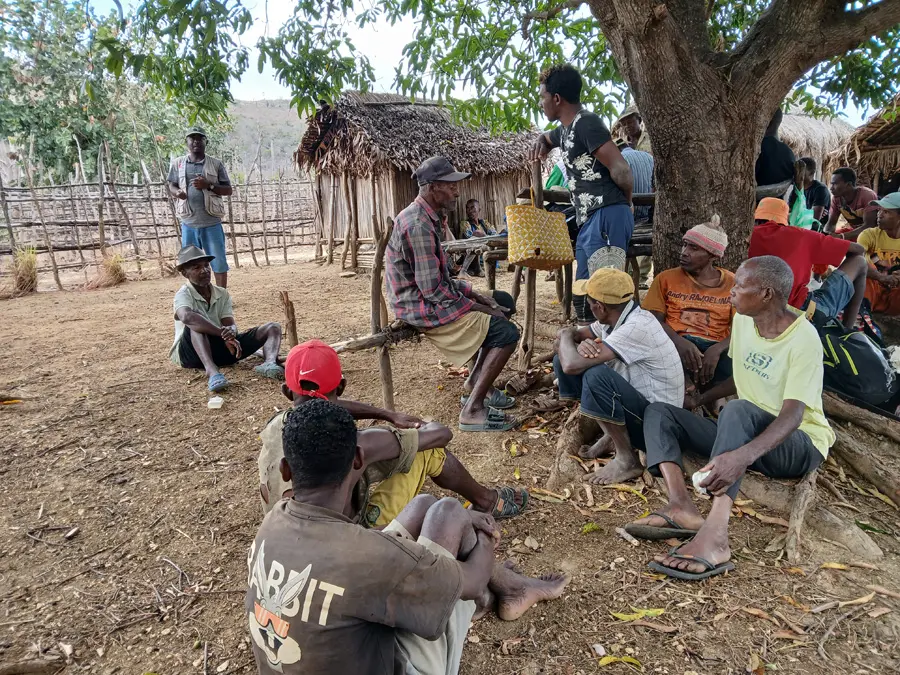
Targeted Interventions in the Most Vulnerable Areas
Green brigades concentrate their actions in eight fokontany identified as the most exposed to fires: Andrevokely, Mahamasina, Andrafiabe, Matsaborimanga, Antsohihy-Ambany, Andrafialava, Antanamivony, and Ambararata.
These localities represent priority areas where the risks of fire outbreaks are particularly high. The permanent presence of the brigades allows for rapid intervention before flames reach the most sensitive forest tracts.
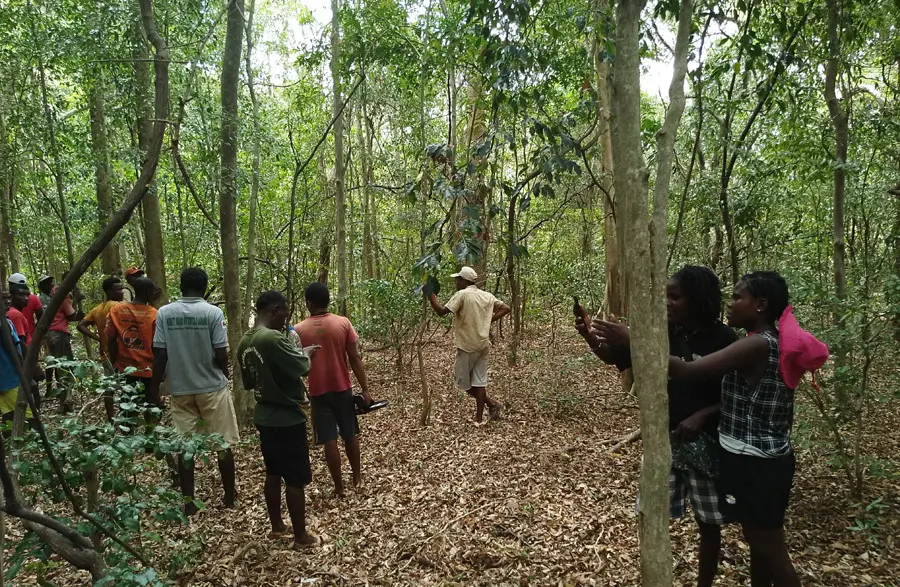
A Collective Mobilization
The operation of the green brigades relies on close collaboration among several key actors. Local communities form the core, but they act alongside communes and fokontany, protected area managers (Fanamby), the Regional Directorate for Environment and Sustainable Development (DREDD), law enforcement—gendarmerie and military—and the KMDTs.
This coordination facilitates information sharing, accelerates response times when fires are reported, and strengthens the enforcement of protected area management rules.
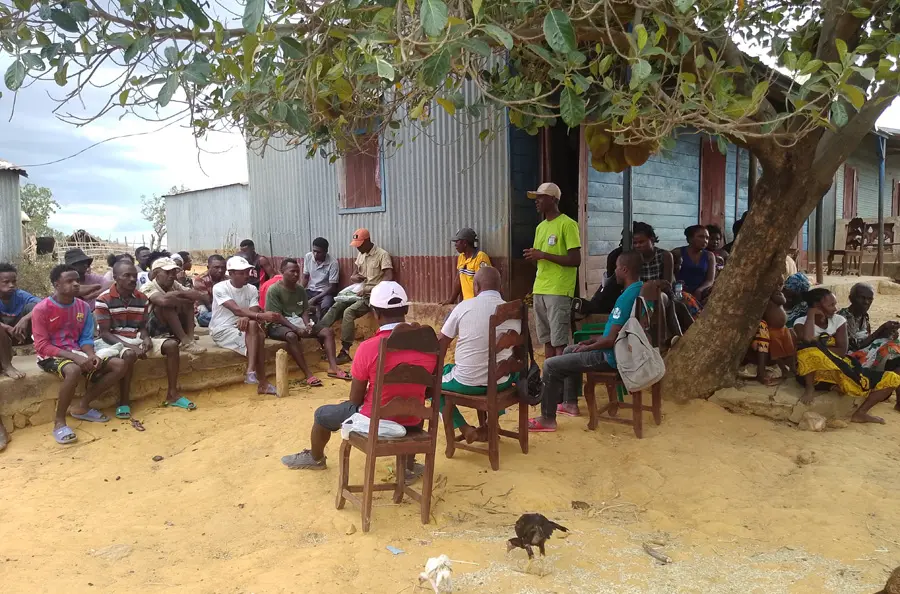
Measurable Results
Since their creation in 2022, green brigades have progressively strengthened the capacity of communities to protect their territory.
Their action is reflected in:
- An increase in early warnings during fire outbreaks;
- Greater population involvement in firefighting operations;
- Better collaboration with authorities to report environmental offenses;
- Increased compliance with protected area management rules;
- A reduction in fire hotspots in several particularly sensitive areas.
Beyond these results, awareness-raising efforts have fostered a deeper understanding of the impact of bushfires on the natural resources upon which communities directly depend. In several villages, behaviors are gradually changing, and prevention is becoming a shared reflex.
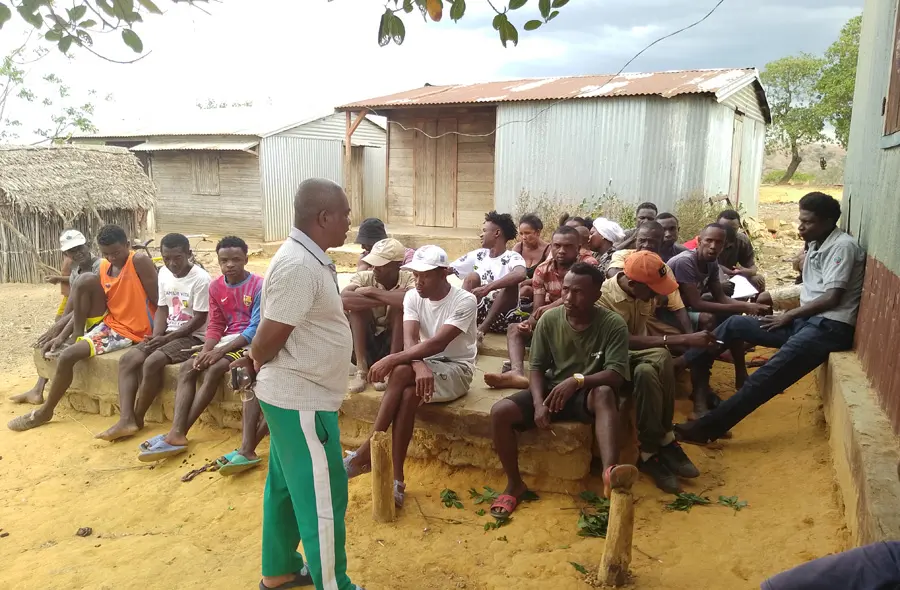
A Responsibility Built Together
Many challenges remain. Slash-and-burn agriculture and charcoal production continue to fuel fire risks, serving as a reminder that forest protection is a long-term endeavor.
However, green brigades are already demonstrating that effective conservation does not rely solely on technical resources or institutional action. It relies above all on women and men who choose to protect the land where they live.
By placing communities on the front line of defense for their natural heritage, green brigades have become an essential driver of conservation in Andrafiamena-Andavakoera. They remind us that preserving biodiversity for the long term is, above all, a shared responsibility.