
An inventory conducted between 2025 and 2026 provides a better understanding of the current state of the Avenue’s baobabs. The results show a significant presence of young trees, but also a more fragile reality: today, the site’s regeneration still largely relies on restoration efforts undertaken on the ground.
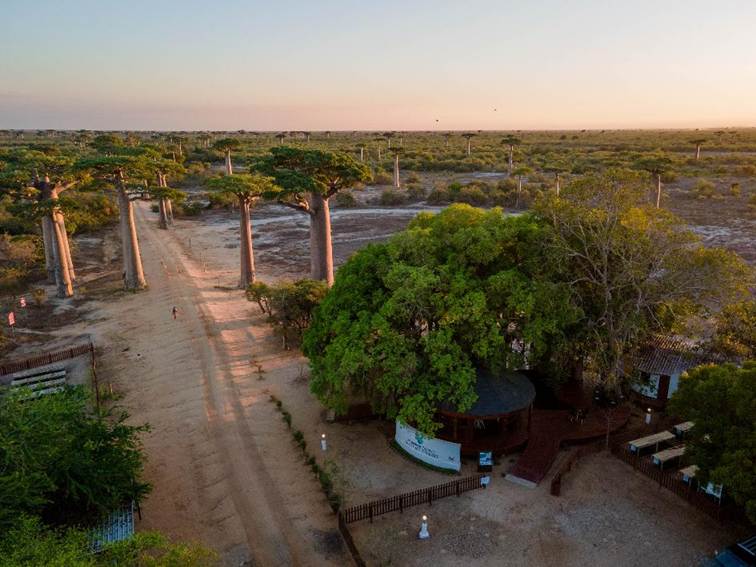
At both sunrise and sunset, the Avenue of the Baobabs offers one of the most famous images of Madagascar. But behind this now-iconic landscape, a question remains: will these giants be able to continue regenerating naturally in the years to come?
To gain clearer insights, the Protected Area’s ecological monitoring teams carried out a comprehensive inventory of the baobabs between 2025 and 2026. The objective was not only to count them, but also to better understand the structure of this population and what it reveals about the site’s future.
A Landscape Dominated by the Renala
Unsurprisingly, the inventory confirms the central place of Adansonia grandidieri, the renala of Menabe, in the identity of the Avenue of the Baobabs.
Out of the 2,773 baobabs recorded, 2,705 belong to this species. The others are much fewer in number: 31 Adansonia rubrostipa and 37 individuals of the za species. This strong dominance contributes to the unique character of the landscape, instantly recognizable to both visitors and local residents alike.
But to understand if the Avenue is truly preparing its next generation, we must go beyond the species list and look at the apparent age of the trees, reflected in their size.
Many Young Baobabs, but Still Fragile Regeneration
At first glance, the figures may seem encouraging.
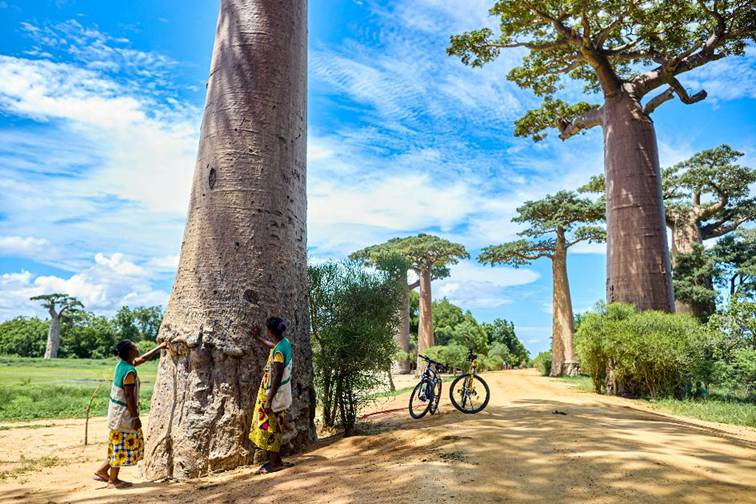
The inventory counts 2,279 small baobabs, compared to 257 intermediate-sized individuals and 232 large adult trees. Such a high presence of young trees might suggest that regeneration is already well underway.
However, the detailed observations prompt a more nuanced view.
Most of these young baobabs do not come from spontaneous natural regeneration. They are predominantly the result of reforestation campaigns conducted in recent years. In other words, while the next generation exists, it still depends heavily on human intervention.
This finding underscores the importance of the plantings already carried out. Today, they play an essential role in maintaining the presence of baobabs in this landscape, while reminding us that achieving more self-sustaining natural regeneration remains a major challenge.
Protecting the Giants, Nurturing the Young
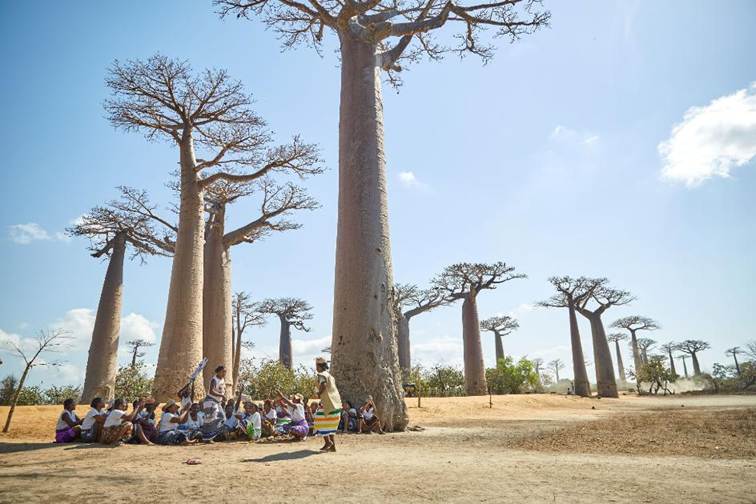
The large baobabs, which have brought global fame to the Avenue, remain a small minority within the total surveyed population. Their low proportion serves as a reminder that the site has been shaped over time by various human and environmental pressures.
Preserving these centuries-old trees therefore remains a priority. But the future of the Avenue is also played out in monitoring young seedlings, continuing restoration actions, and identifying the conditions that would allow baobabs to regenerate more naturally.
In this context, each inventory brings much more than a mere status report. It helps monitor population trends, adjust management decisions, and direct conservation efforts where they are most needed.
Preserving the Avenue of the Baobabs is therefore not just about protecting the giants that catch the eye today. It is also about giving young trees the best possible chance to grow, so that future generations can, they too, walk beneath their shadows one day.