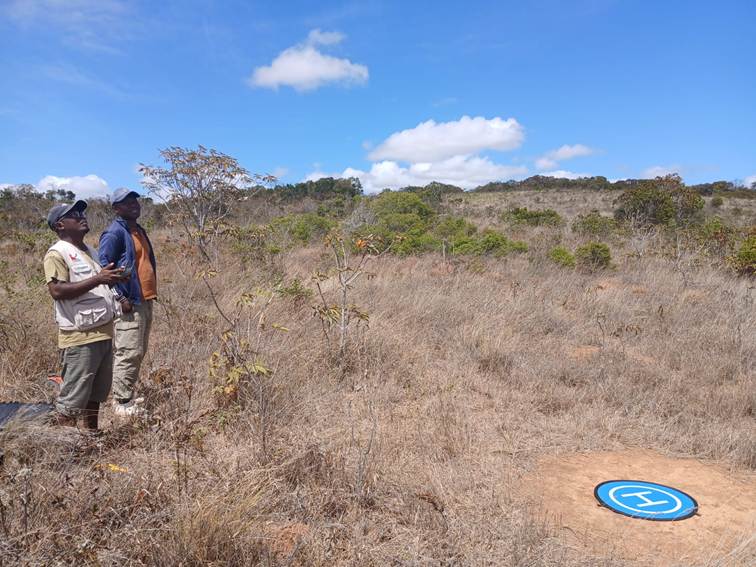
Six months after the first seedlings were planted, Fanamby’s teams returned to Beangivy, in the Andrafiamena-Andavakoera Protected Area. Conducted from 10 to 12 September 2026, the monitoring mission aimed to assess how the young trees were developing, measure their survival rate and identify the additional work needed.
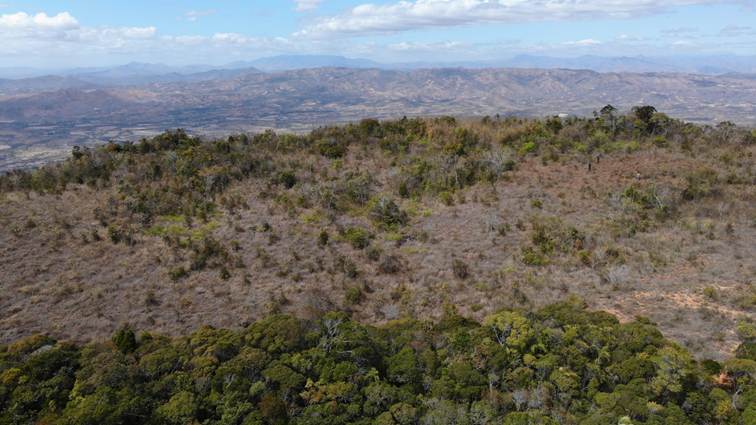
Returning to the restored plots
Between 10 February and 20 March 2026, seven tree species were planted across 10 hectares in Beangivy: Hintsy (Intsia bijuga), Sohihy (Breonadia salicina), Mantaliala (Terminalia sp.), Voatsikomoka (Vitex beraviensis), Mantaly (Terminalia mantaly), Magnary (Dalbergia sp.) and Rotro (Syzygium sp.).
But restoration does not end once the seedlings are planted. Teams need to return regularly to the plots to see how the trees are developing, identify any difficulties and adjust their interventions accordingly.
With this in mind, Fanamby’s teams returned to the field six months after the planting activities.
Observing, measuring and maintaining
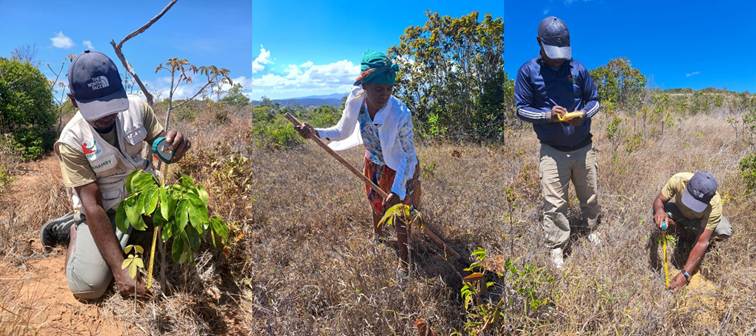
During the mission, the teams checked the survival of the seedlings, observed their growth and assessed their overall condition. They also carried out the maintenance work needed to support their development.
Observations were conducted in 50-by-50-metre sample plots. This method allows the teams to monitor a representative section of the planted area and compare the results from one mission to the next.
The monitoring recorded a 55% survival rate.
This figure provides an initial assessment of the restoration work. It helps the teams identify areas that require more attention, better understand the conditions faced by the young trees and prepare for the next interventions.
Complementing field monitoring with aerial imagery
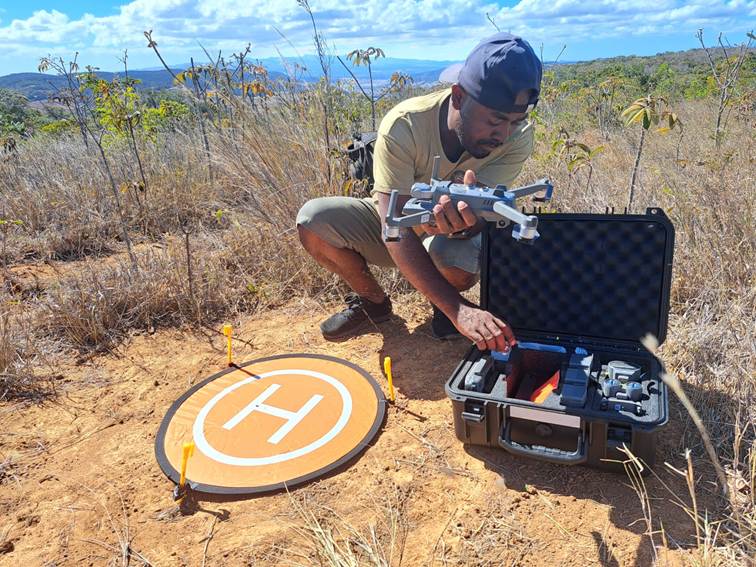
Aerial images were also captured using a drone. They provide a broader view of the restored plots and complement the observations made on the ground.
These initial images will serve as a reference for future monitoring missions. By comparing them over time, the teams will be able to better observe changes across the restored areas.
Planting is therefore only the first step. The young trees must then be monitored, maintained and observed to understand how they are adapting to conditions in the field.
In Beangivy, returning six months after planting allowed the teams to carry out an initial assessment and identify the additional care needed to support the development of the young trees.