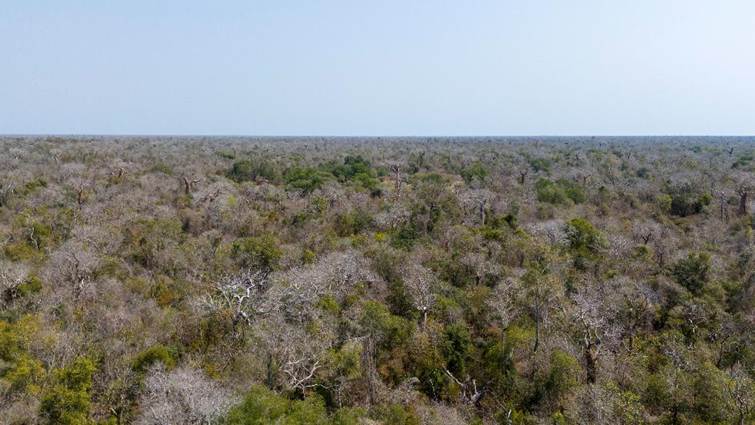
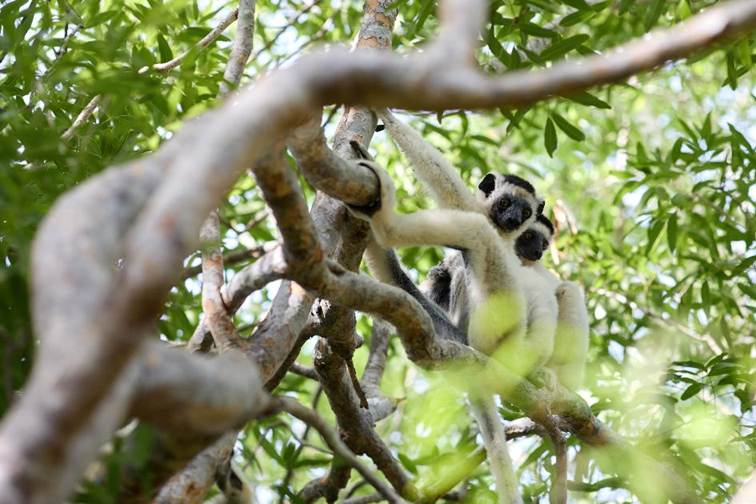
In November and December 2025, Fanamby teams carried out ecological monitoring of diurnal lemurs in several sectors of the Menabe Antimena protected area. The results show that these species are not evenly distributed across the forest. Behind these differences lies a valuable reading of habitat conditions and conservation priorities.
Lemurs do not use all forests in the same way. In some sectors, sightings follow one after another; in others, they become rare, or even nonexistent. For field teams, these differences reveal far more than the simple presence of animals: they provide clues about habitat quality and about the areas that deserve particular attention.
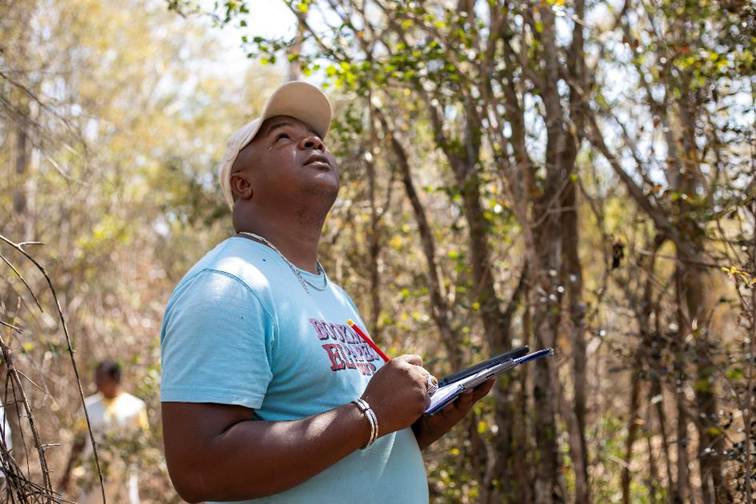
The monitoring, conducted between November and December 2025, focused on diurnal lemurs, meaning species active during the day. For this mission, special attention was given to Verreaux’s sifaka (Propithecus verreauxi) and the red-fronted lemur (Eulemur rufifrons). Teams walked transects on foot — fixed routes crossing different habitat types — and recorded every lemur observed along the way. Repeated under the same protocol from one campaign to the next, this monitoring makes it possible to compare results over time and track changes in populations.
A Snapshot of the Forest
In just a few weeks of fieldwork, the teams produced a snapshot of lemur presence across three sectors of the protected area. Although this campaign represents only one moment in time, it already highlights important differences between the sites surveyed. These observations help us better understand where habitats remain most suitable and where greater vigilance is needed.
| Zone | Lemurs observed | Relative density | What the results reveal |
| Lambokely | 70 | 11.67 individuals/km | A habitat that is particularly favorable to lemurs. |
| Ampataka | 14 | 2.33 individuals/km | A more limited presence, which deserves regular monitoring. |
| Marofandilia | 0 | 0 individuals/km | No individuals were observed during this campaign; further investigation will be needed. |
Relative density is calculated from observations made along the transects walked during the monitoring.
What the Numbers Reveal
Behind these figures lies a forest with many faces. Lambokely concentrated the highest number of observations, a sign that conditions there are currently particularly favorable to lemurs. In Ampataka, their presence is more discreet, while in Marofandilia, no individuals were observed during this campaign. A single protected area can thus contain habitats whose conservation status differs significantly.
The results become even more meaningful when compared with other ecological monitoring exercises. The baobab monitoring also shows that Ampataka offers particularly encouraging indicators. Even if the two campaigns do not cover exactly the same sites, they tell a shared story: some sectors still retain a forest capable of supporting rich biodiversity.
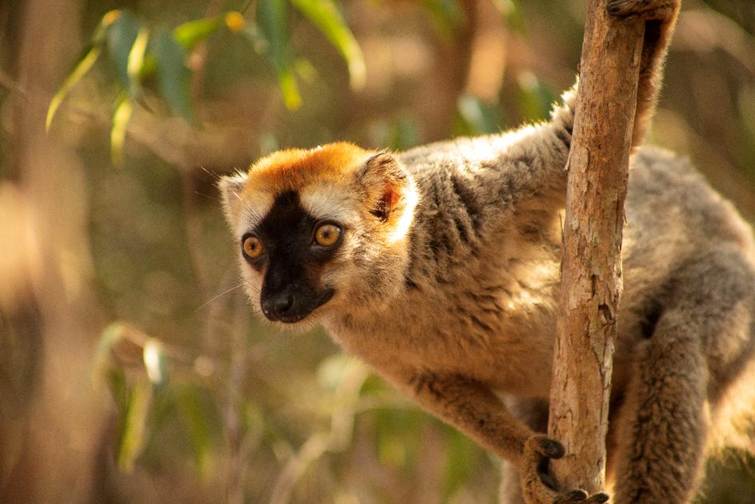
Lemurs are therefore valuable indicators of forest condition. Their presence depends on continuous forest cover, sufficient food resources, and a habitat that is not heavily disturbed. By cross-referencing their observations with those of other ecosystem components, such as baobabs, Fanamby teams obtain a more complete picture of forest health and can better target the areas where conservation efforts need to be strengthened.
Results That Open the Next Phase
A monitoring campaign never provides every answer. What it does provide, however, is a solid starting point. Repeated year after year under the same protocol, these observations make it possible to distinguish a temporary fluctuation from a real population trend.
Over time, this growing body of data becomes a genuine guide for protected area management. It helps teams understand how the different sectors of Menabe Antimena are evolving, detect the first signs of change, and focus efforts where the forest needs them most.