
Every year, with the arrival of the dry season, the landscapes of Loky Manambato become more vulnerable to fires, and the risk of fires increases. These fires, often linked to agricultural burning, can threaten crops, but also the forests and biodiversity of the protected area. Faced with this recurring challenge, Fanamby and the Regional Directorate for the Environment and Sustainable Development (DREDD SAVA) have chosen an innovative approach: directly involving local communities in the search for solutions.
Rather than relying on traditional awareness campaigns, these actors have organized a series of community meetings in the most exposed areas. The objective? Listening, understanding and co-constructing measures adapted to the realities on the ground.
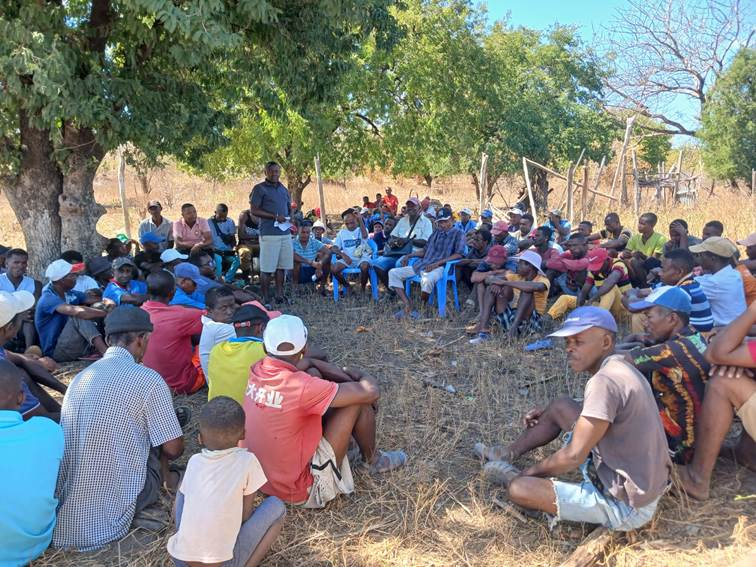
Meetings to turn local experience into action
Over eight days, four communes hosted assemblies with nearly 380 participants – farmers, herders, village chiefs and members of local associations. Unlike traditional approaches, where the rules are often defined from the outside, these meetings have chosen to start from the experience of the communities. Because they live as close as possible to the field, because they use fire in their daily activities and because they are the first to be exposed to its consequences, the inhabitants are also in the best position to imagine realistic, appropriate and sustainable responses.
The discussions quickly revealed pragmatic solutions, such as:
- The systematic installation of firebreaks around the plots before any burning, to limit the spread of flames.
- The ban on solitary burns: from now on, about ten people must be present to monitor the fire until it is completely extinguished.
- The creation of a common register: a simple notebook, in which each farmer writes down the date and place planned for his burning. This tool allows villages to coordinate their activities, avoid dangerous overlaps and mobilize reinforcements when needed.
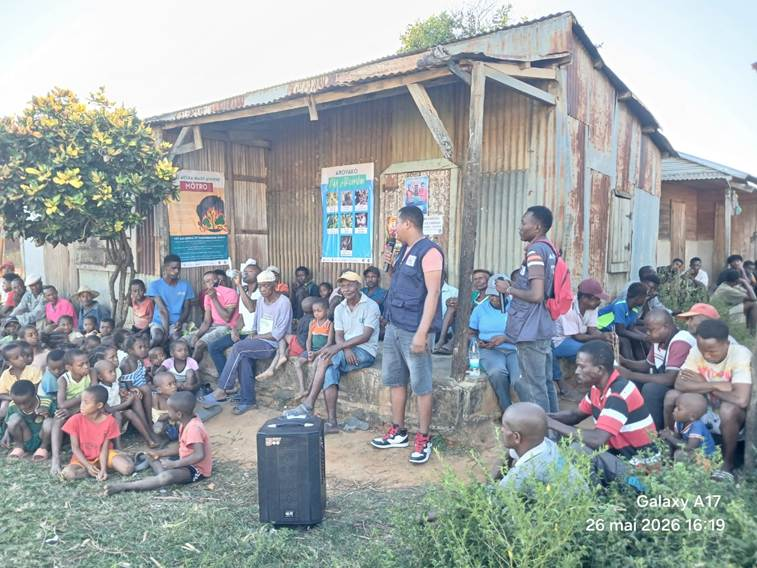
A collective commitment that changes the game
An important step forward is the establishment of community early warning groups. In concrete terms, as soon as a fire is seen, volunteers from the village immediately notify the neighbours and the local authorities. In these situations, speed is of the essence: sometimes a few minutes are enough to prevent a fire from spreading.
Beyond the technical measures, the exchanges above all made it possible to strengthen the involvement of the inhabitants. At the meetings, they discussed their own organization, the responsibilities to be shared, and the rules to be put in place in each village. The questions quickly focused on very concrete aspects:
- “Who is responsible for alerting in the event of a fire?”
- “How can we better organize ourselves among neighbors to monitor the burns?”
- “What rules does our village want to apply to protect our land?”
This local ownership is the key to success. As one participant pointed out: “We know that fires are part of our daily lives. But this year, we have understood that we can control them together.»
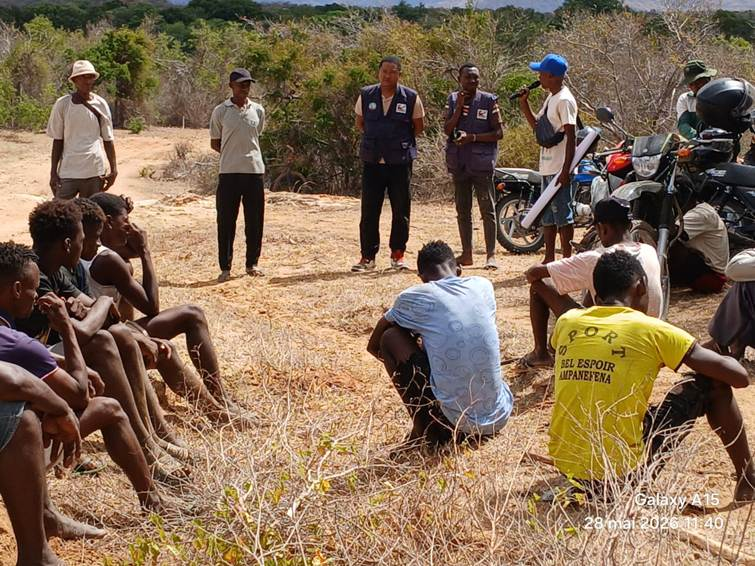
A shared responsibility for a safer future
It is still too early to measure the concrete impact of these initiatives. The fire season has only just begun, and the next few months will be decisive. However, one thing is already clear: in Loky Manambato, prevention no longer relies solely on the authorities or NGOs. The first actors are the communities themselves – those who live on these lands, who depend on them, and who now have the tools to act.
This approach, centred on dialogue and co-responsibility, could well inspire other regions facing the same challenges. Because the fight against bushfires is not won with bans or fines, but with the collective intelligence and commitment of all.