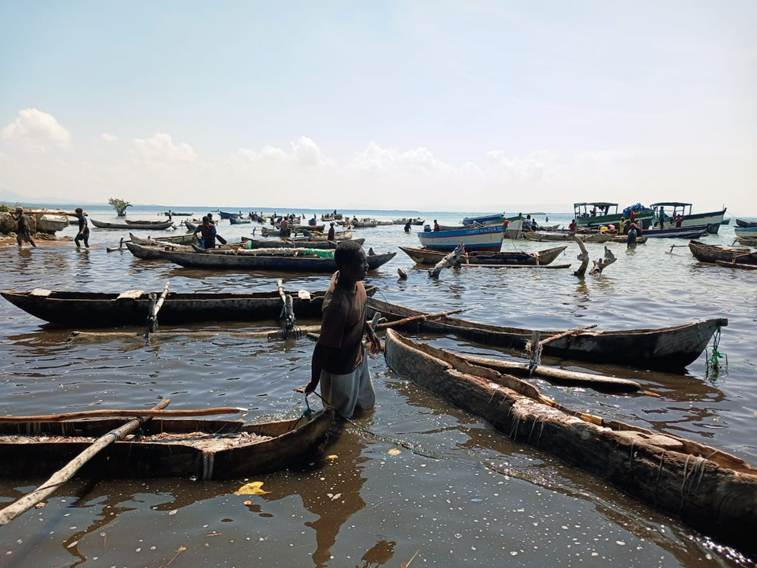
In the Loky Manambato protected area in northern Madagascar, the opening of octopus fishing season has become a highly anticipated event. Each year, it is more than just the resumption of an economic activity. For fishers, it confirms that by letting the sea breathe, communities stand to gain everything.
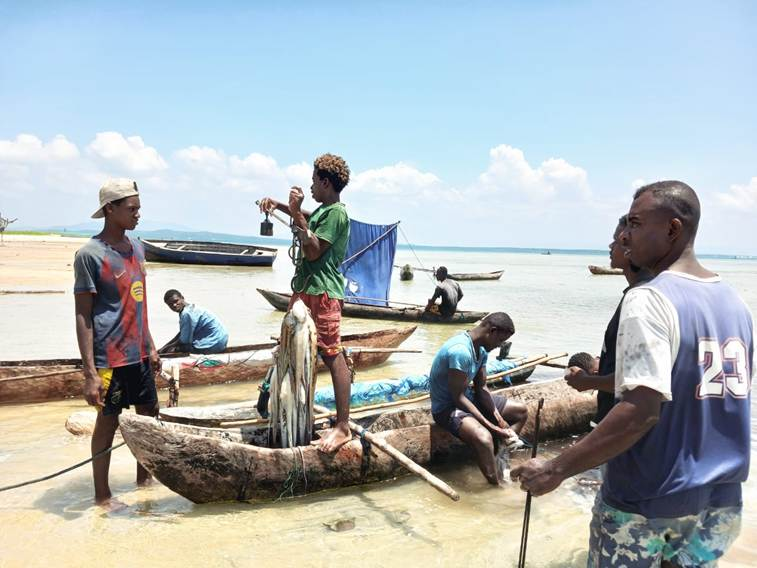
Just a few years ago, the idea of temporarily closing octopus fishing met with strong resistance. For many people, it was hard to accept giving up, even for a few months, a resource their household income directly depended on. Today, perspectives have shifted.
In Loky Manambato, many fishers now see this closure as one of the best collective investments they have ever made. As every year, the season opens in March. But the date was not handed down from above. It was set at the end of a meeting between fishing federations, a sign of increasingly local and participatory governance.
Giving the resource time to recover
In the SAVA region, octopus fishing is closed twice a year: first from December to March, then again from June to July. The goal is to give octopuses time to grow and reproduce.
The principle is fairly straightforward. Octopus is a fast-growing species. Within a few months, its size and weight increase significantly. Its short life cycle, averaging 12 to 18 months, makes fishing closures particularly effective. By suspending fishing during these critical windows, communities allow the resource to replenish quickly.
In other words, a few months of waiting translates into larger octopuses and larger incomes.
Stepping back from fishing temporarily has therefore become communities’ best investment.
What has changed over the years
Five years ago, the situation looked very different. Fish stocks were declining, catches were getting leaner, and fishers had to venture further and further out to sea just to bring back enough fish or octopus.
“Before, we had to go very far out to find fish. Now, even close to shore, we catch enough for the day,” says a fisher from the village of Ambavarano.
For octopus too, the signs of depletion were plain to see. Catches were smaller, of poorer quality, and therefore fetched lower prices. A kilogram sold for around 5,000 ariary, trapping many families in a vicious cycle: fish more to earn less, at the risk of depleting stocks further still.
At the time, fishing closures were decided by the Regional Directorate of Fisheries and the Blue Economy (DRPEB). But on the ground, they were rarely respected. Without a sense of ownership, the rules remained external to the communities.
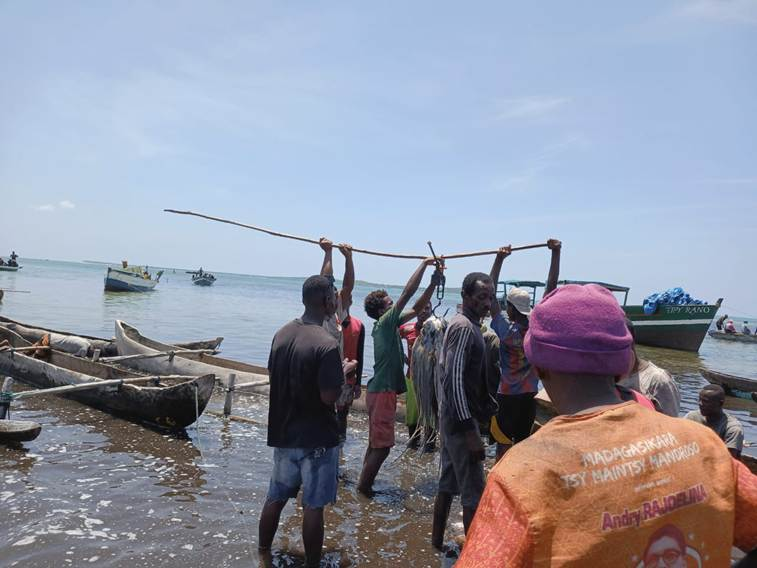
Conservation that makes sense because it serves communities
Change came gradually. Communities were first made aware of the depletion of resources and the risks of stock collapse. Then, through ongoing exchanges, training, and sustained grassroots work, they began to connect the dots between protecting the resource and improving their incomes.
This is where Fanamby played its most important role, facilitating dialogue, strengthening local organizations, bringing fishers together, and helping them take ownership of the rules. Communities are no longer simply called upon to follow instructions. They now take part in setting closure periods, implementing them, and monitoring compliance.
The results are clear this year, both in the numbers and in people’s homes:
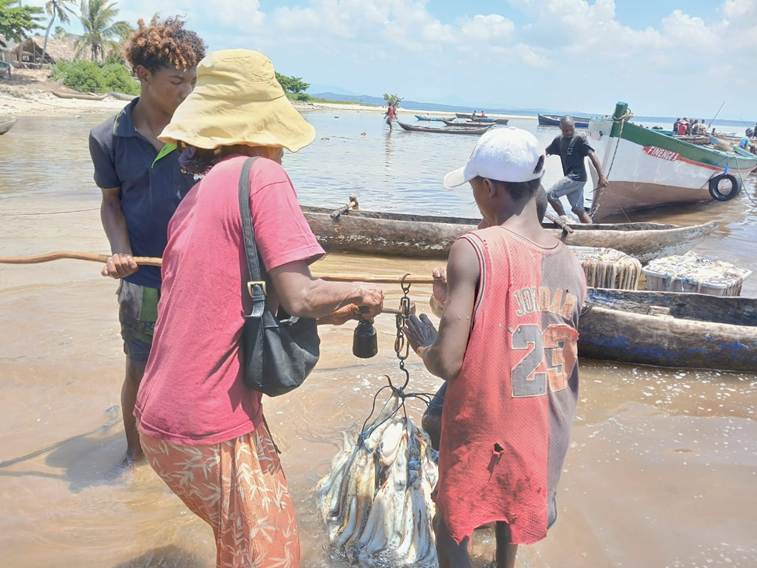
- The price per kilogram of octopus has risen from 5,000 to 8,000 ariary, a 60% increase, sometimes reaching 10,000 ariary.
- In the first days of the opening, catches can exceed 10 tonnes.
- A single fisher can bring in up to 50 kilograms in a day. Women and children average 20 to 30 kilograms each. For many families, this income covers day-to-day expenses and also helps launch or support other livelihood activities.
Behaviors are shifting too. As fishers come to understand that the health of reefs and corals directly affects their catches, they are gradually adopting more responsible practices. The fishing closure is no longer seen merely as a rule to follow, it has become a way to better understand why protecting the marine environment matters in everyday life.
Challenges to overcome together
Despite this progress, not everything is resolved. One of the main ongoing challenges is managing migrant fishers. Some communities coming from other areas are not always familiar with locally established rules or do not respect them. This puts at risk a system that has been carefully built over several years.
Economic precarity also remains a reality for some families. During closure periods, making ends meet can be difficult when income drops. Compounding this are population growth and a heavy dependence on natural resources, which continue to face significant pressure.
But here too, solutions are being sought locally first. These issues are discussed at fishing federation meetings, together with communities, technical services, and relevant authorities. Gradually, fishers are taking their place in decision-making, regulation, and the collective management of their resources.
A community-based management strategy
This octopus fishing closure does not operate in isolation. It is part of a broader effort to manage marine resources communally in Loky Manambato, bringing conservation and development forward together, so communities can see tangible benefits.
For example, Fanamby has also supported fishing federations in establishing Tahirin-daoko, locally managed no-take zones where resources are left undisturbed to allow regeneration. These reserves also serve as a safety net for communities in the event of a cyclone, sudden shock, or lean season.
Another pillar of this dynamic is women’s leadership. Today, 75% of the protected area’s 2,000 hectares of mangroves are managed by women’s associations. Through training in leadership, governance, financial management, and sustainable resource management, Fanamby has helped nurture women’s groups that are better organized, more visible, and increasingly engaged in community life.
Step by step, a whole new way of managing resources is taking shape: more local, more collective, and more rooted in local values. A way of protecting nature while sustaining communities and the local economy.